14 June 2025
Vanessa Rolf is a local lady who went to school in Bookham and has fond memories of the Barn Hall where we meet each month. She studied fabric and textiles in Birmingham before working in the fashion industry.
For a self-confessed ‘free spirit’ the repeat production of butterflies and chrysanthemums proved uninspiring and so she then studied mixed media which has led to her teaching, running creative workshops and providing a community consultancy service. In her own words she just ‘can’t stop making’.
Having inherited lots of cotton and linen fabrics, which ‘handled lovely’, she kept moving house with them, until she made up her mind to put them to use. She dyed them all blue and stitched them together. Some of this fabric had been salvaged from ships by her grandfather, whose war stories inspired her to consider that the fabric of domestic life had its own story. Her nautical grandfather clearly made a strong impression – his life, his war stories
and his fabrics becoming an integral part of the body of work that has been
exhibited, incorporated into today’s presentation and were available for our closer inspection.
Vanessa explained how she takes references from maps and carries out research exploring countries with her ‘mind’s eye’ that she is unlikely to visit, such as Siberia and Australia. Her work allows her to develop fictional locations as well as develop her techniques. Her grandfather’s old navy kit bag used for holidays, has naturally influenced her colour palette. Whilst navy is a strong feature, Vanessa does not limit herself to just this colour and encouraged us to explore our own colour choices. Part of the appeal of maps and landscapes is that often people can identify with the location. This was illustrated beautifully with a hand stitched depiction of the Norwegian Fjords that was recognisable even without the name to identify it.
An unusual aspect of Vanessa’s work identified with maps of lakes in Australia that only filled once every 10 years; this meant that the maps were not absolute or factual, and where sand dunes were identified these too are shifting – loose hand stitches on felt conveyed this message perfectly. Closer to home, the soil strata illustrated by a Winchester archaeology group enabled Vannessa to produce a body of work that not only showed soil structure and layers but also ‘found objects’ that she appliqued to the surface.
Vanessa’s techniques incorporated (but were not limited to) running stitch, fly stitch, digital machine stitching, couching, hand stitching, fabric dyeing, piecing cottons, linens and denims.
Her mantra of stitching every day for however long she could cram into her working, living, family day was inspirational.
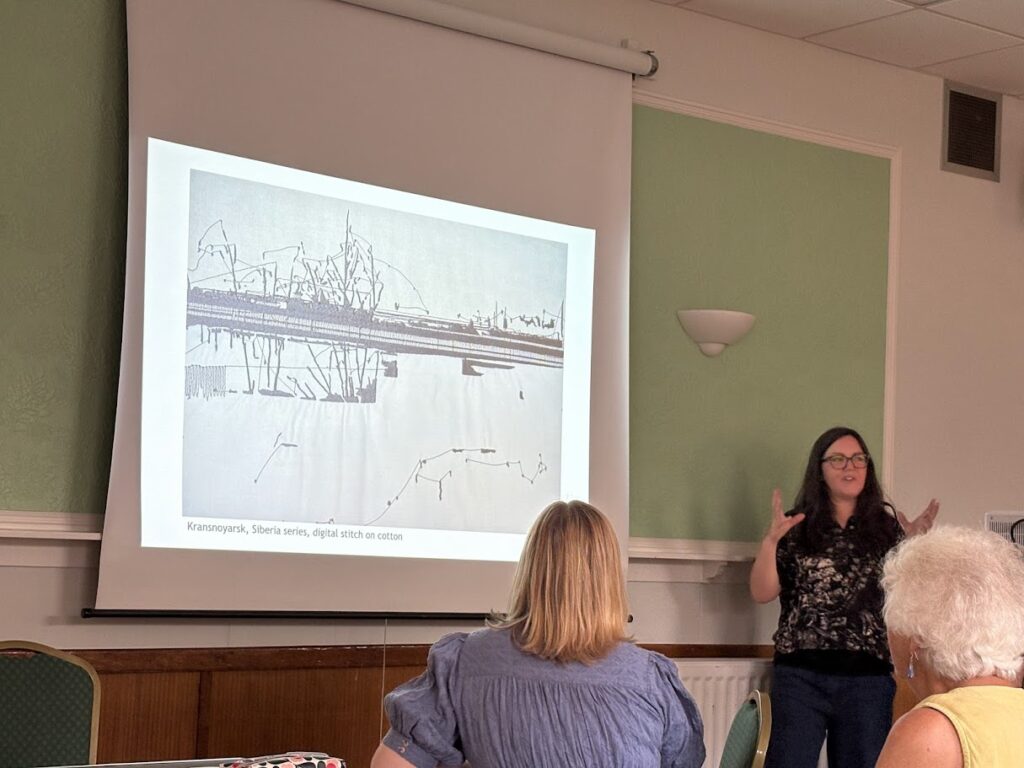
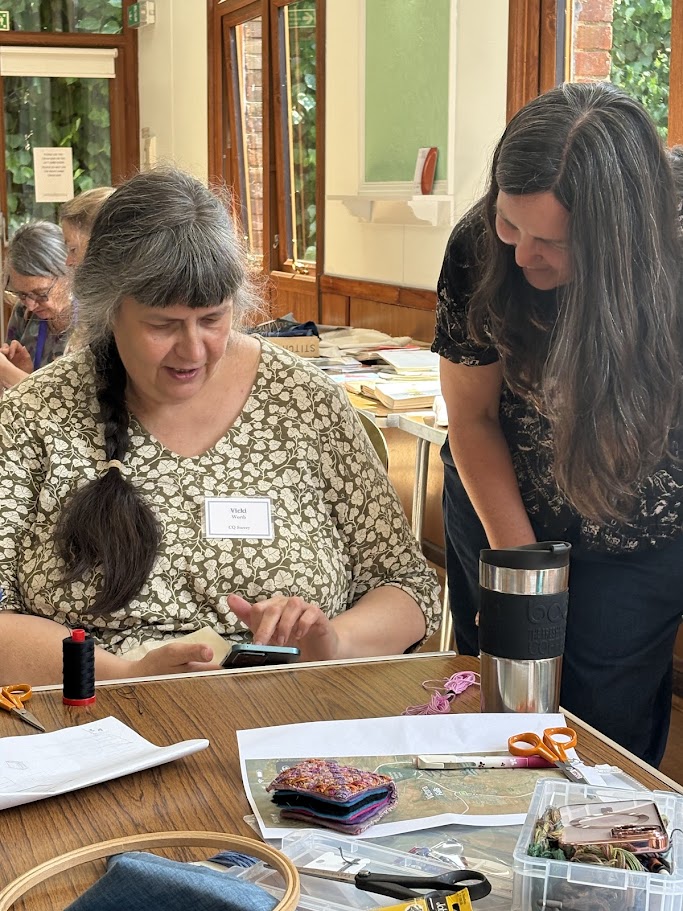
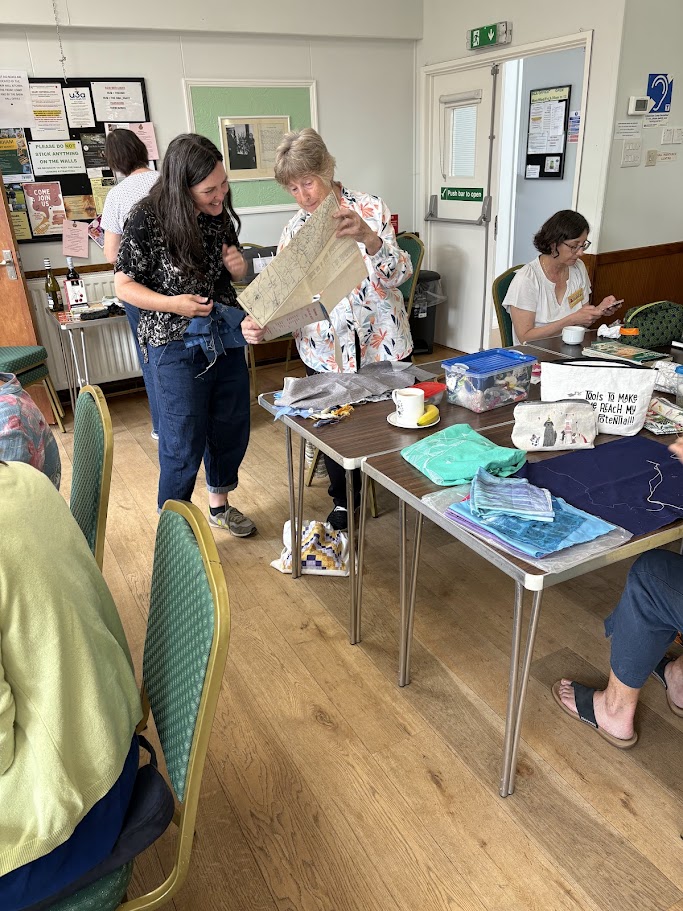
Following her talk, Vanessa then delivered an afternoon’s workshop. Although
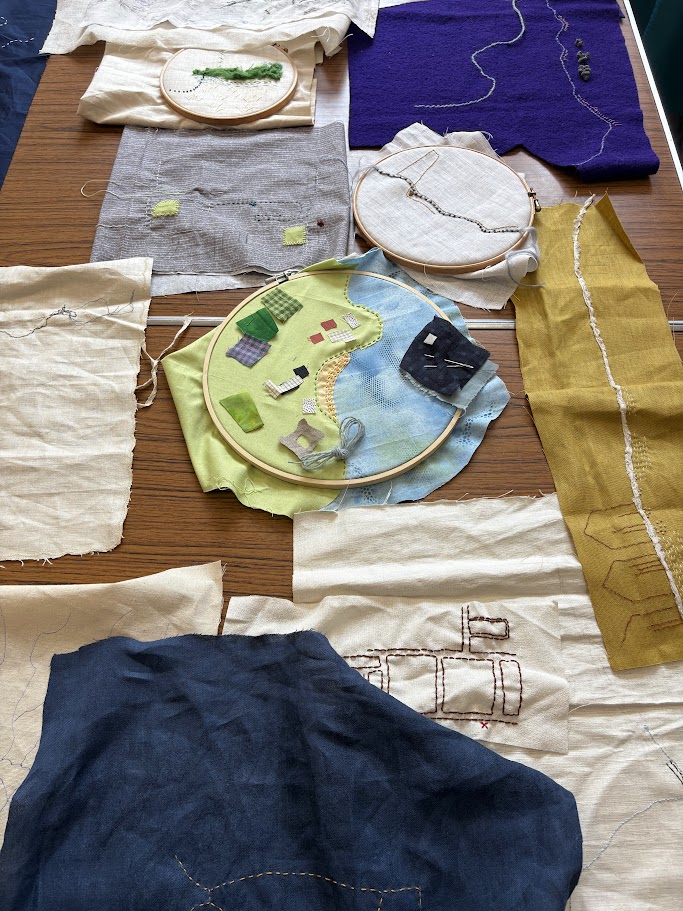
delivered for a group the approaches were individualised. We were encouraged to take a walk around a place we were familiar with…start stitching streets and roads, from memory. If your walk exceeds the width of fabric then join new bits, using fill stitches to identify landmarks; by adding fabric as and when you needed it, it was not as daunting as starting with a large blank piece of fabric. Couching was encouraged, using the same stitch but with different threads, for example a road is a thicker line than a footpath.
We were encouraged to stitch just enough for us…and if we were stitching a piece that we were no longer enjoying we could simply stop rather than persevere unto completion…we were given permission to Stop!
Report by Donna Munday